How Chocolats Camille Bloch Makes Due Diligence Work in Practice
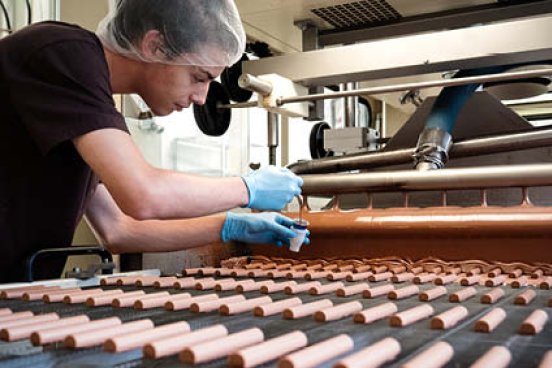
Camille Bloch, a Swiss family-owned company, has been producing chocolate specialities since 1929. With about 180 employees, it is specialized in creating richly filled chocolates by processing cocoa from bean to bar. By sourcing a wide range of ingredients such as cocoa, hazelnuts and almonds globally, its supply chain is a challenging one to manage.

What does sustainability mean to Chocolats Camille Bloch?
“Sustainability has long been part of how we do business, even if it was not always described in those terms. Protecting people, resources and farming communities is not only a responsibility, but also essential to the long-term future of our company. As our CEO once said: our sustainability policy is to make good chocolate. If we make a high-quality product, we can charge a fair price, pay a fair price throughout the value chain and reduce waste because consumers value the product.
It is therefore important for us to understand where our raw materials come from and how they are produced. So, our sourcing policy is to buy as locally as possible: first regionally, then within Switzerland and Europe. For ingredients that cannot be sourced closer to home, such as cocoa and nuts, we work with suppliers that meet recognized sustainability standards.
Being a smaller company, we do not have a dedicated sustainability department. Sustainability is managed by a multidisciplinary team consisting of our CEO, the Head of Operations, the Head of Procurement and myself. This way of working does not only improve our efficiency, but it also means that decisions are immediately integrated into procurement, production, communication and marketing. By understanding the different parts of the business, we can develop practical solutions that fit the company and balance sustainability ambitions with costs, regulations and business needs.”
How do you manage risks across different products and supply chains?
“Our ingredients come from several different supply chains, including cocoa from Peru, milk powder from Switzerland, hazelnuts from Georgia and Turkey, almonds from the USA. Each combination of product and country brings different potential risks. To prioritise, we need reliable information, but this is often difficult to obtain. Sources such as the ILAB, UNICEF, and Google Alerts help us keep track of the latest information. We also stay in contact with suppliers and visit sourcing countries when possible.
The CSR Risk Check gives us an additional perspective by highlighting risks linked to a specific country and product. I particularly value its broad scope. It covers not only issues such as deforestation and child labour but also risks such as corruption. If the tool identified a serious concern relating to cocoa from Peru, I would discuss it with our head of procurement.
We cannot eliminate or independently verify every risk, but we can stay engaged, maintain dialogue with suppliers and use the available information to make more responsible decisions. While prioritising is important, we try not focus all our sustainability efforts on just one ingredient or issue. Attention may shift from child labour to deforestation, for example, while risks related to hazelnuts or milk receive less attention. We therefore try to look at the value chain as a whole and consider the social and environmental challenges connected to all our main ingredients.”
How do you decide where to focus your sustainability efforts?
“We prioritise our actions on where we have direct control and can make a clear impact. Long-term relationships with suppliers are essential because regular contact and mutual trust make it easier to discuss concerns and identify practical opportunities for improvement. This helps us focus on projects both in our supply chain and closer to home.
One example of a supply chain solution was our check on the living wages of our cocoa producers. Since we are in direct contact with our supplier in Peru we could inform about the farm-gate price and cocoa prices to estimate whether farmers were earning a decent income. By doing this research, we have a clear view of what is happening at the source. So now, as cocoa prices lower after an all-time high in 2024, we can reassess what support is needed and what we can realistically contribute.
We are also taking a long-term approach to securing the quality of our most strategic raw material by establishing our own hazelnut plantation in Georgia. Managing part of our hazelnut production ourselves gives us greater control over quality, traceability and farming practices, while helping us build knowledge that can strengthen our entire supply chain over time.
Our solutions can also take a different form. At our production site, for example, we recently replaced two cocoa-roasting machines from the 1980s that still ran on heating oil. The machines had reached the end of their lifespan and replacing them also enabled us to eliminate fossil fuel use at our site. This was both a financially sound decision and an environmental improvement. We believe sustainability measures are most durable when they also make sense for the business.”
What advice would you give to companies starting their due diligence journey?
“Do not reinvent the wheel. Look at how larger or comparable companies approach due diligence and reporting and adapt the most useful elements to your own organisation. For our double materiality assessment, I used examples from several other companies as a practical starting point. The goal is not a perfect assessment, but a reasonable and workable approach.
Furthermore, I would also recommend keeping ownership within the company. Make it practical by involving internal stakeholders and try doing the work yourself. External experts can provide guidance or review your work, but doing the assessment yourself helps you understand the risks and use the findings to make better decisions."
More articles
Deforestation & biodiversity loss in Africa: an important business risk
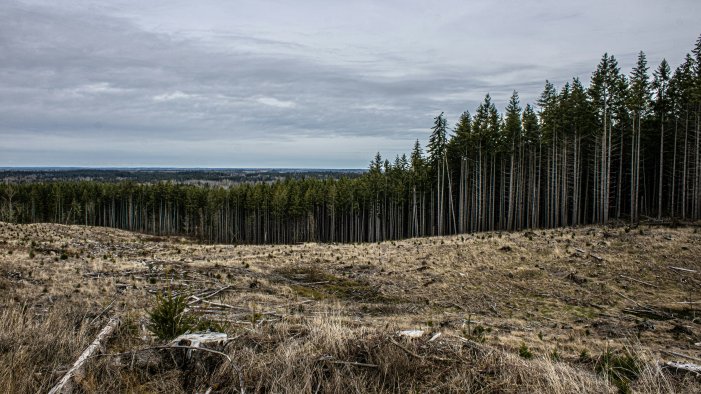
The European union accounts for a third of African trade, importing products like palm oil, cocoa, and critical minerals. While these imports are crucial for many of the products sold and used in the EU every day, they can be linked to significant deforestation and biodiversity loss in Africa. For any company pursuing business on the continent, ignoring these issues can cause legal, operational, and business risks. To help you identify and address these challenges, the CSR Risk Check provides current and relevant information on African deforestation-associated products. (05/08/2026)

Webinar Recording: Discover the CSR Risk Check
In our webinar on 12 November 2025, we explored the latest updates of the CSR Risk Check. The session explained how the tool has been expanded, how it incorporates perspectives from the Global South, and how it can support companies preparing for upcoming European supply chain legislation. If you missed it, you can watch the recording below!
Webinar: Discover the CSR Risk Check
International chains are under increasing pressure from new European legislation. From the Green Deal to the Critical Raw Materials Act, there is a growing expectation in more and more sectors that companies make their chains transparent and responsible. This requires due diligence. In this webinar on November 12, from 3:00 to 4:30 PM CET (UTC+1), you will discover how to use the CSR Risk Check to gain insight into the main risks in your chain.